Skip to content

 School of Geography and the Environment

University of Oxford

 The Transport Studies Unit

Professor David Banister

People

Professor David Banister

Academic Profile

David Banister is Professor of Transport Studies at the School of Geography and the Environment (SoGE). During 2009-2010 he was also Acting Director of the Environmental Change Institute in SoGE. Until recently he was Professor of Transport Planning at University College London. He has been Research Fellow at the Warren Centre in the University of Sydney (2001-2002) on the Sustainable Transport for a Sustainable City project and was Visiting VSB Professor at the Tinbergen Institute in Amsterdam (1994-1997). He was a visiting Professor at the University of Bodenkultur in Vienna in 2007.

He is editor of the Journal Transport Reviews (2000-) and joint editor of Built Environment (1993-), and is on the editorial board of Town Planning Reviews (1993-), European Journal of Transport Infrastructure Research (1999-), International Journal of Sustainable Transport (2005-), Logistics and Sustainable Transport (2006-) and Environment and Planning B (2008-).

He has been an International Assessor for the Delft Technical University Research Centres 2006, OTB 2002, 2004, TRAIL, 2006, and is currently a member of the Transumo Scientific Consultative Committee 2005-2010. He has been an assessor for Volvo Foundation's Future Urban Transport research programme 2006-2007, their PhD programme (2008), and the 2009 VINNOVA assessment of Swedish Transport Research Centres. He is involved in the assessment of the EU ERC Advanced Investigators Grants (2007-2012 - Vice Chairman), and the European Parliament's STOA study on the future of long distance travel in Europe (2007-2008). He is currently involved in research with several international agencies, including EU 7th Framework Programme projects, The European Environment Agency, The Asian Development Bank, ITPS in Japan and the Netherlands Environmental Assessment Agency, WHO and UN Habitat.

Prof. Banister has advised on appointments and promotions for International Chairs in the USA, Canada, Israel, Netherlands and Australia, as well as at various institutions in the UK, including: Newcastle, Leeds, Loughborough, Aberdeen, Liverpool, Bristol and London.

He has acted as an adviser to several government departments (Defra, DfT, DECC, Cabinet Office, and the NAO). He has been a member of numerous Research Council Committees including; EPSRC Link Programme on Future Integrated Transport 1999-2004; EPSRC Link Programme on Inland Surface Transport 1996-2002, and the ESRC Professorial Fellows panel (2010). He has been the director of the ESRC Transport and Environment programme, a member of the EU STELLA/STAR TransAtlantic Research Network organising team 2000-2005, the ODPM Planning Research Network (2003-6) as well as the HEFCE RAE Town and Country Planning Panels (1999-2001 and 2006-2008).
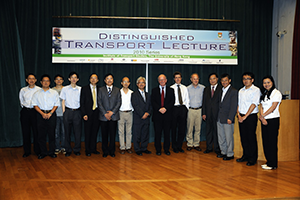
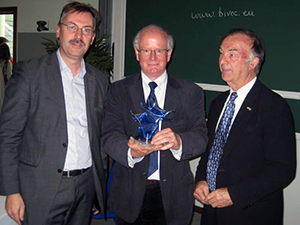
Prof. Banister has delivered numerous invited keynote speeches for overseas conferences, these include: Tokyo, Vancouver, Berlin, Barcelona, Munich, Kyoto, (2011); Copenhagen, Paris, Hong Kong, Shanghai Lisbon, Volos, Stockholm, Berkeley (2010); Delhi, Copenhagen and Paris (2009); Dublin and Brussels (2008). He was awarded the Transport Policy Prize ([PDF: 23KB]) for his 2008 Transport Policy paper entitled 'The Sustainable Mobility Paradigm' at the 12th World Conference on Transport Research.

Current Research

Prof. Banister has authored and edited 19 books that summarise his own research and some of the international projects that he has been involved with. He has also authored (or coauthored) more than 150 papers in international refereed journals, together with a similar number of other papers in journals or as contributions to books. Other outputs include research monographs (over 50), and reports for research sponsors (over 100). Over the period 2005-2011, over 70 papers have been presented at major national and international conferences.

He has an established international reputation in transport research, in particular the contribution that the social sciences can make to the analysis of transport. His current research has concentrated on five main areas:

  1. Policy Scenario Building - this has been undertaken in the context of sustainable urban development and transport. The perspective taken is a long term one (2030+), and it explores the future of cities and how transport can contribute to that future. Novel methods of modified backcasting have been used to develop visions of desirable city futures, together with the analysis of policy packages and paths to move towards those futures. Research has been carried out for the EU (POSSUM and ICTRANS), the German Government (URBAN21), the RICS, the DfT (VIBAT) and HEFCE (UrbanBuzz: VIBAT-London), and for other cities such as Delhi, Vancouver, Auckland, Jinan, Oxfordshire, the European Parliament (ETAG project), and most recently as part of the Global ITPS and the ASEAN Studies. The EPSRC Visions 2030 project also uses the same methodology.
  2. Reducing the Need to Travel - this includes analysis of pricing and planning interventions to achieve reductions in trip distances, car use and emissions. Much of this research is related to city centre options, including raising densities, settlement size thresholds, mixed use developments, and local neighbourhood design issues. The key concern here is to provide local opportunities and to improve accessibility so that the quality of life in cities can be improved. Research has been carried out for the EU (DANTE, TRANSLAND, TRANSPLUS, PLUME, OPTIC), the EPSRC (Cities and Sustainability Programme and SUE1), work for international agencies (NEAA and ADB), and as part of the Future of Cities programme with the Saïd Business School.
  3. Climate Change, Energy and Environmental Modelling - this research has acted as an integrating part of the research, as it examines the means by which the carbon and energy costs of transport can be quantified and used in evaluation. It also covers the energy consumption patterns of different settlement types and their associated travel demand patterns. A GIS model (ESTEEM) has been developed for use by local authorities to help them understand the travel, energy and environmental implications of different settlement options. Research has been carried out for the EPSRC (ESTEEM), the North Oxfordshire Consortium (Upper Heyford Development), the EU (JUPITER and SAMI) and the CPRE. Recently this has extended to biomass and alternative energy fuels sources in the TSEC-BIOSYS project and to the JM-ICERT project on carbon and energy reduction in transport. A scoping study on Climate Change and Transport is being carried out (2009-2010) as part of the initial activities of the UK Transport Research Centre.
  4. Transport Investment and Economic Development - this research has tackled the important issue of measuring the non transport benefits of transport investments. Methodologies have been developed to identify additionality or new activity (employment, inward investment, land and property value uplift) resulting from transport investments, and this has involved the use of time series data and GIS mapping techniques. Research has been carried out for ODPM, RICS, TfL and the Scottish Executive.
  5. Rural Transport and Employment - this has been a continuing interest, both in terms of transport's role in helping to reduce inaccessibility and in encouraging sustainable rural communities. Recent research here has looked at the particular problems of the young rural unemployed and the development of an evaluation tool for assessing social needs, as well as value for money from the rural transport partnerships. Research has been carried out for the EPSRC (TRANTEL) and Geodemographics and rural bus services), Defra, Countryside Agency, Commission for Rural Communities, and the Welsh Advisory Group.
Recent Research Projects
  • NERC, ESRC, EPSRC, MRC, BBSRC - part of the TSEC - BIOSYS project on assessing the potential and use of biomass in energy supply: completed 2009.
  • VIBAT-London: visioning and backcasting for London transport to 2050, Hefce and DIUS, with other similar studies in Delhi: completed 2009. Continued with further commissions from Delhi (ADB), Vancouver, Oxfordshire, Auckland, and Jinan.
  • European Environment Agency, Expert advice on Transport, Emissions and the Environment, with TRL and on Scenario Building: 2008-2010.
  • EPSRC - two major studies, one on measurement and monitoring walking and cycling in the UK, and the other to explore innovative methods to significantly increase use levels of walking and cycling - use of scenario building, visualisation and participatory methods: 2008-2013.
  • James Martin School - new Institute for Carbon and Energy Reduction in Transport, with the Department of Engineering: 2009-2012.
  • FP7 EU FREIGHTVISION project on long term futures for freight transport in Europe: 2008-2010.
  • ESRC project on older people's views on their quality of life and its enhancement: completed 2009.
  • ESRC/DfT UK Transport Research Centre scanning project on Climate Change and Transport: 2010-2011.
  • FP7 OPTIC project on examining policy options in combination, including their effectiveness, synergies, rebound effects and unintended consequences: 2009-2011.
  • FP7 LOGMAN project on logistics and organisational issues relating to freight transport in Europe: 2010-2012.
  • OxTran - networking project for researchers in the Oxford Region interested in transport: 2008-2010.
  • UN-HABITAT 2013 Global Report on Human Settlements on Sustainable Urban Transport - 2010-2012.
  • James Martin Future of Cities programme project on Visioning and Backcasting of sustainable Transport in Jinan (China) - 2010-2011.
  • Danish Council for Strategic Research projects on Drivers and Limits, and on Measurement of Uncertainty in Project Evaluation - 2010-2013.
  • Additional smaller projects on Transport and Health (WHO), ASEAN Cities (ITPS and TRL), High Speed Rail (Warwick Business School)

Teaching

Prof. Banister teaches the Final Honour School Special Subject / Option course 'Transport and Mobilities'.

He also teaches the 'Sustainable Urban Development and Transport' option for the MSc Courses, as well as 3 core sessions of the MSc on Transport and Climate Change, on 'Energy and Sustainable Transport', and on 'Public Acceptability in Transport'.

Prof. Banister is responsible for the 12 undergraduate students in geography at St Anne's College with Nick Middleton, organising and taking a full part in their weekly tutorial sessions. There are also about 18 other geography students at St Anne's taking MSc and D.Phil. programmes.

Current graduate students include:
  • Nihan Akyelken
    Capital and development in social and cultural contexts
  • Malek Al-Chalabi
    Socio/technical research of personal transport use
  • Karen Anderton
    Sub-national government responses to reducing the climate impact of cars
  • Eda Beyazit
    Fair distribution of socio-economic benefits of transport investments
  • Jian Liu
    Decarbonizing the Chinese road transport sector: policy options and potential effects of hybrid and electric pathways
  • Sharad Saxena
    Urban transport investment decisions: balancing efficiency, environment and equity
  • Martino Tran
    A systems analysis of vehicle electrification for climate and energy security policy in the UK
  • Zichen Zhang
    Impact assessment of different utilization scenarios for Pure Electric Vehicles (PEV) on China's transport system and power grid
D.Phil. students successfully completing since 2001:
  • Maria Price (2011)
    The Trans-European Networks – transport cohesion in south-west Europe
  • Stephanie Sodero (2010)
    Policy in motion: reassembling carbon pricing policy development in the personal transport sector in British Columbia
  • Lloyd Wright (2007, UCL)
  • Robin Hickman (2007, UCL)
  • Kang Rae Ma (2005, UCL)
  • Moshe Givoni (2004, UCL)
  • Aki Suwa (2003, UCL)
  • Peng Nye Lee Tang (2002, UCL)
  • Dominic Stead (2002, UCL)
  • Joanna Williams (2001, UCL)
  • Stephen Marshall (2001, UCL)

Publications

Author and editor of 18 research books, including:
Author or co-author of more than 100 papers in international refereed journals, including the following since 2001:
Published a further 100 papers in journals or as chapters in books - those published since 2001 are listed here:
  • Banister, D. and Woodcock, J. (forthcoming, 2012) Sustainable urban transport: integrating environmental, health and equity objectives. In, Proudfoot, J. (ed.) Environmental Health and Equity: Global Strategies and Innovation.
  • Hickman, R., Ashiru, O. and Banister, D. (forthcoming, 2012) Modelling the potential transport CO2 mitigation impacts of available policy interventions. In, Shiftam, Y, Geerlings, H and Stead, D. (eds.)
  • Hickman, R. and Banister, D. (forthcoming, 2012) Thinking strategically: pathways towards low carbon transport. In, Ryley, T. and Chapman, L. (eds.) Transport and Climate Change, Bingley, Emerald.
  • Banister, D. and Hickman, R. (2011) Low-carbon transport in a developed megalopolis: the case of London. In, Rothengatter, W., Hayashi, Y., Schade, W. (eds.) Transport Moving to Climate Intelligence. Springer, pp. 41-52, ISBN: 978-1-4419-7642-0.
  • Banister, D. and Thurstain-Goodwin, M. (2011) Quantification of the non-transport benefits resulting from rail investment. Journal of Transport Geography, 19: 212-223.
  • Givoni, M. and Banister, D. (2011) Reinventing the wheel: planning the rail network to meet the mobility needs of the 21st century. In, Frenkel, A. and Shefer, D. (eds.) Societies and Motion, Bingley, Emerald.
  • Tapio, P., Finel, N., Banister, D., Luukkanen, J., Vehmas, J. and Willamo, R. (2011) Global decarbonisation patterns - total and transport CO2 intensity. Oxford, TSU Working Paper 1056, October.
  • Banister, D. and Givoni, M. (2010) The pursuit of integration: how far and what next? In, Givoni, M. and Banister, D. (eds.) Integrated Transport: From Policy to Practice. London: Routledge, pp. 335-346.
  • Givoni, M. and Banister, D. (2010) The need for integration in transport policy and practice. In, Givoni, M. and Banister, D. (eds.) Integrated Transport: From Policy to Practice. London: Routledge, pp. 1-11.
  • Hickman, R., Seaborn, C., Headicar, P. and Banister, D. (2010) Planning for sustainable transport: integrated spatial planning and transport. In, Givoni, M. and Banister, D. (eds) Integrated Transport: From Policy to Practice. London: Routledge, pp 33-54.
  • Salling, K.B. and Banister, D. (2010) Feasibility risk assessment of transport infrastructure projects: the CBA-DK decision support model. European Journal of Transport and Infrastructure Research, 10(1): 103-120.
  • Banister, D. (2009) Rural Transport. In, Kitchin, R. and Thrift, N. (eds.) International Encyclopedia of Human Geography, Vol. 11, pp. 460-464. Oxford: Elsevier.
  • Banister, D. (2009) Rural accessibilities and mobilities. In, Becker, U., Böhmer, J. and Gerike, R. (eds.) How to Define and Measure Access and Need Satisfaction in Transport. Dresdner Institut für Verkehr und Unwelt e. V., pp. 165-178.
  • Banister, D. (2009) Conclusion: the dilemmas of sustainable transport. In, Kassens, E. (ed.) Sustainable Transportation: An International Perspective (Projections, 9, MIT Journal of Planning). MIT Department of Urban Studies and Planning, pp. 121-124.
  • Banister, D. and Anable, J. (2009) Transport policies and climate change. Ch. 5 in, Davoudi, S., Crawford, J. and Mehmood, A. (eds.) Planning for Climate Change: Strategies for Mitigation and Adaptation for Spatial Planners. Earthscan, pp. 55-69.
  • Hickman, R. and Banister, D. (2009) Sustainable cities: transport. CABE. Web-based guide.
  • Salling, K.B. and Banister, D. (2009) Assessment of large transport infrastructure projects: the CBA-DK model. Transportation Research Part A, 43: 800–813.
  • Woodcock, J., Edwards, P., Tonne, C., Armstrong, B.G., Ashiru, O., Banister, D., Beevers, S., Chalabi, Z., Chowdhury, Z., Cohen, A., Franco, O.H., Haines, A., Hickman, R., Lindsay, G., Mittal, I., Mohan, D., Tiwari, G., Woodward, A. and Roberts, I. (2009) Public health benefits of strategies to reduce greenhouse-gas emissions: urban land transport. The Lancet.
  • Banister, D. (2008) The land use and local economic impacts of congestion charging. Chapter 5 in, Ison, S. and Rye, T. (eds.) The Implementation and Effectiveness of Transport Demand Management Measures. Ashgate, pp. 75-94.
  • Banister, D. (2008) The Big Smoke: congestion charging and the environment. Chapter 9 in, Richardson, H.W. and Bae, C.C. (eds.) Road Congestion Pricing in Europe: Implications for the United States. Edward Elgar.
  • Simmonds, D., and Banister, D. (2007) Regional transport and integrated land-use / transport planning tools. Chapter 10 in, Dimitriou, H.T. and Thompson, R. (eds.) Strategic Planning For Regional Development in the UK: A Review of Principles and Practices. Routledge.
  • Banister, D. (2006) Transport, urban form and economic growth. Keynote paper for the JTRC/ECMT Round Table 137, Berkeley, California. OECD Publishing.
  • Banister, D. (2006) Smart transport for smart cities, Urban Design, 100. Invited contribution to the 100th Issue of Urban Design.
  • Banister, D. with J. Pucher and M. Lee-Gosselin (2006) Making sustainable transport politically and publicly acceptable. In, Rietveld, P. and Stough, R. (eds.) Institutions and Regulatory Reform in Transport. Cheltenham: Edward Elgar.
  • Banister, D. (2006) Transport and urban sprawl. The EU perspective. Scienze Regionali (Italian Journal of Regional Science).
  • Banister, D. (2006) Society, mobility and climate change, Agora.
  • Stead, D. and Banister, D. (2006) Decoupling transport growth and economic growth in Europe. In, Jourquin, B., Rietveld, P. and Westin, K. (eds.) Towards Better Performing Transport Networks, Routledge.
  • Banister, D., Hickman, R. and Stead, D. (2006) Looking over the horizon: visioning and backcasting. In, Perrels, A., Himanen, V. and Lee-Gosselin,M. (eds.) Building Blocks for Sustainable Transport - Dealing with Land Use, Environment, Health, Safety, Security, Congestion and Equity. Helsinki: VATT.
  • Banister, D. with R. Hickman (2005) Reducing travel by design: what happens over time? In, Williams, K. and Burton, E. (eds.) Spatial Planning, Urban Form and Sustainable Transport. Aldershot; Ashgate. pp. 102-119.
  • Banister, D. (2005) Time and travel. In, Schintler, L. and Reggiani, A. (eds.) Methods and models in Transport and Telecommunications: Cross Atlantic Perspectives. Berlin: Springer Verlag. pp. 335-348.
  • Banister, D. with E. Duxbury (2005) Civilising transport. In, Hunt, J. (ed.) London's Environment - Prospects for a Sustainable World City. London: Imperial College Press. pp. 195-212.
  • Banister, D. (2004) Developing advice for policy makers on the use of soft measures: some thoughts. In, Communicating Environmentally Sustainable Transport: The Role of Soft Measures, Organisation for Economic Cooperation and Development, Paris. pp. 107-110.
  • Banister, D. (2004) Overcoming barriers to implementation in transport policy. In, Stough, R. and Rietveld, P. (eds.) Institutions, Regulation and Sustainable Transport. London: Spon. pp. 54-68.
  • Banister, D. (2004) Transport and spatial policies: the role of regulatory and fiscal incentives, Keynote paper in ECMT Round Table 124, pp. 117-152, European Conference of Ministers of Transport, Economic Research Centre, Paris.
  • Banister, D. (2003) Memorandum by David Banister (TYP 29), Published as part of the inquiry into the 10 year Plan for Transport carried out by the House of Commons Transport, local Government and the Regions Committee, HC 558-II, Volume II, pp. 191-197.
  • Banister, D. (2003) Sustainable transport and public policy. In, Kim T.J. (ed.) Transportation Engineering and Planning, Theme 6.40 in the Encyclopaedia of Life Support Systems (EOLSS) sponsored by UNESCO, Oxford: EOLSS Publishers Co. Ltd.
  • Banister, D. with M. Givoni (2003) Aviation and the environment: using economic instruments, House of Commons Environmental Audit Committee Budget 2003 and aviation, 9th Report of Session 2002-03, HC672, Ev97-101, July.
  • Banister, D. with P. Steen (2002) EU policy scenario building for sustainable mobility. In, Black, W.R. and Nijkamp, P. (eds.) Social Change and Sustainable Transport. Bloomington: Indiana University Press. pp. 71-78.
  • Banister, D. (2002) Sustainable development - or faster, further and more? In, Jenkins, J. (ed.) Remaking the Landscapes of Britain. London: Profile Books Ltd. pp. 85-104.
  • Banister, D. with Y. Berechman (2002) The economic development effects of transport investments. In, Pearman, A., Mackie, P. and Nellthorp, J. (eds.) Transport Projects, Programmes and Policies: Evaluation, Needs and Capabilities. Aldershot: Ashgate. pp. 107-124.
  • Banister, D. (2001) Conflicts and resolutions. In, Davoudi, S., Batty, S. and Layard, A (eds.) Sustainable Development and Planning, London : E&FN Spon. pp. 269-281.
  • Banister, D. (2001) Sustainable transport policies - Scenarios for the future. In, Giorgi, L. (ed.) Transport Policy and Research: What Future? Ashgate Publishing: Avebury. pp. 90-129.
  • Banister, D. (2001) Transport planning. In, Button, K. and Hensher, D.A. (eds.) Transport Systems and Traffic Control. Handbooks in Transport 3, Amsterdam: Elsevier-Pergamon Science, pp. 9-19.
Other outputs include research monographs (35) and reports for researcher sponsors (over 100):
  • Hickman, R., Ashiru, O. and Banister, D. (2009) 20% transport. Visioning and backcasting for transport in London. Executive Summary. VIBAT London.
  • Banister, D. (contributor) (2008) Success stories within the road transport sector on reducing greenhouse gas emission and producing ancillary benefits. Technical report No 2/2008. EEA (European Environment Agency) and OPOCE (Office for Official Publications of the European Communities).
  • Banister, D. (contributor) (2008) Climate for a transport change. TERM 2007: indicators tracking transport and environment in the European Union. EEA Report No 1/2008. EEA (European Environment Agency) and OPOCE (Office for Official Publications of the European Communities).
  • Banister, D. (2005) Sustainable rural communities. Thought paper for Commission for Rural Communities, November.
  • Banister, D. with R. Hickman (2005) VIBAT - Visioning and backcasting of UK transport policy. Three Reports for DfT, January, June and September.
  • Banister, D. (2005) Scope for public transport improvements to contribute to increases in economic activity. Report for the National Assembly of Wales, with TTR, June.
  • Banister, D. with R. Hickman (2005) How to design a more sustainable and fairer built environment: transport and communications. Report for the DTI Future Intelligent Infrastructure System Project, June.
  • Banister, D. (2005) An investigation into the link between transport infrastructure investment and sustainable rural communities, Report for Defra, with TTR, June.
  • Banister, D. (2005) The role of transport in supporting sub-national growth. Report for DfID, with Lloyd Wright, May.
  • Banister, D. (2004) Property value and public transport investment, Stage 2 Pilot Study Report: Testing the Methodology on the Croydon Tramlink, January, with ATIS REAL Wetheralls, the Symonds Group and Geofutures, pp. 124.
  • Banister, D. (2004) Developing a methodology to capture land value uplift around transport facilities. Report for the Scottish Executive, with GVA Grimleys, David Simmonds Consultancy, Hargest and Wallace Planning Ltd, October, p168.
  • Banister, D. (2003) Transport and city competitiveness, Report for the DfT, March, with Llewelyn Davies.
  • Banister, D. (2003) Impacts of ICTs on transport and mobility (ICTRANS). Report for the European Commission DG Joint Research Centre, with ARC Seibersdorf Research Vienna, FOI Stockholm, ISI-FhG Germany, MERIT The Netherlands, and TNO-STB The Netherlands, Technical Report EUR, June.
  • Banister, D. (2003) JLE impact study review. Report for TFL, July, with Stephen Marshall, ATIS REAL Weatheralls and Geofutures.
  • Banister, D. with R. Vickerman and P. Mackie (2003) Review of Edinburgh Transport/Economic Interaction Studies. Report for Transport Initiatives Edinburgh, July.
  • Banister, D. (2003) Rural transport partnerships assessment. for the Countryside Agency, with TTR, November.
  • Banister, D. (2002) Business and the local transport plan process. Report for the RICS, Published November 2002.
  • Banister, D. (2002) Land value and public transport, Stage 1 Report submitted to RICS and ODPM, September.
  • Banister, D. with D. Stead (2001) Introducing long term cross cutting issues into national policy: the case of sustainable development in the UK, Bartlett School of Planning, Working Paper 19, January.
  • Banister, D. (2001) Avoiding the need to travel. Working Paper for the Sustainable Transport for Sustainable Cities Project, Sydney, April, pp. 6.
  • Banister, D. (2001) Pricing and funding - some pragmatic thoughts. Working Paper for the Sustainable Transport for Sustainable Cities Project, Sydney, April, pp. 9.
  • Banister, D. (2001) Achieving accessibility. Working Paper for the Sustainable Transport for Sustainable Cities Project, Sydney, April, pp. 24.
Conference Papers at National and International Events since 2002:
  • Banister, D. (2010) Keynote Paper: Sustainable Transport for Sustainable Cities - Presented at the 5th Congress of Transport Engineers on Transport Research: 27-28th September 2010, Volos, Greece.
  • Banister, D. (2010) Keynote Paper: Sustainability and Future Studies for the International Conference on Our Future in the Making - organised by KTH Stockholm and the Swedish Futures Institute: 17-19th November 2010, Stockholm.
  • Banister, D. (2006) Sustainable transport: challenges and opportunities. Keynote paper for the 11th International Conference of the Hong Kong Society for Transportation Studies, Hong Kong December.
  • Banister, D. (2006) The true costs of air travel. Inaugural lecture in the John Ferguson Building Bishop's Stortford College, October.
  • Banister, D. with R. Hickman (2006) Looking over the horizon: transport and reduced CO2 emissions in the UK by 2030. Paper presented at the AET Conference, Strasbourg, September.
  • Banister, D. (2006) Is paradigm shift too difficult in transport? Invited paper at the Vancouver Workshop, June.
  • Banister, D. (2006) City futures and transport. Keynote paper for the AMIDST Conference on Transport Planning - A Design Challenge, Amsterdam, June
  • Banister, D. (2006) Paying for growth: unlocking infrastructure investment in south east England. Invited presentation to the Regional Studies Association meeting at UCL, May.
  • Banister, D. (2006) CO2 minus 60% by 2030 - the impossible challenge for transport. Paper presented at the Planning Research Conference, University College London, April.
  • Banister, D. (2006) Transport, urban form and economic growth. Keynote paper for the JTRC/ECMT Round Table 137, Berkeley, California, March.
  • Banister, D. (2006) Sustainable urban development and transport. Keynote presentation to the 6th Swiss Transport Research Conference, March, Monte Verita, Switzerland.
  • Banister, D. (2005) CO2 minus 60% by 2030 - the impossible challenge for transport. Paper presented at the NECTAR Workshop, Fiesole, Florence, Italy, October.
  • Banister, D. (2005) London - background, trends and congestion charging. Paper presented at the SSTP Transport Congestion Indicators Workshop, Shanghai, September.
  • Banister, D. (2005) London - sustainable transport indicators. Paper presented at the SSTP Transport Congestion Indicators Workshop, Shanghai, September.
  • Banister, D. with M. Thurstain-Goodwin (2005) Property values and public transport: the Jubilee Line extension. Paper presented at the AET Conference, Strasbourg, September.
  • Banister, D. with R. Hickman (2005) Images of the future - CO2 emissions reduction and UK transport policy. Paper presented at the ERSA Conference, Amsterdam, August.
  • Banister, D. with R. Hickman(2005) Images of the future - CO2 emissions reduction and UK transport policy. Paper presented at the AESOP Conference, Vienna, July.
  • Banister, D. with R. Hickman (2005) Towards a 60% reduction in UK transport CO2 emissions - a scenario building and backcasting approach. Paper presented at the ECEEE Conference, Nice, June.
  • Banister, D. (2005) Congestion charging in London - two years on. Invited Paper for presentation at the International Seminar on Mobility and Urban Sustainable Development, Rome - 18th February.
  • Banister, D. with J. Edge (2004) Meeting the cost of movement - land value and public transport. Paper presented at the RTPI Conference Moving in the Right Direction?, London, October.
  • Banister, D. with R. Hickman (2004) Reducing travel by design: urban form and the commute to work. Paper presented at the AESOP Conference, Grenoble, France, July.
  • Banister, D. with K-R. Ma (2004) Extended excess commuting techniques as a jobs-housing balance measure. Paper presented at the AESOP Conference, Grenoble, France, July.
  • Banister, D. (2004) Assessing transport futures. Invited workshop presentation at the University of Calgary, Canada, May.
  • Banister, D. with J. Edge (2004) Property value and public transport. Launch of the RICS, DfT and ODPM project, RICS, London, May, with Jeremy Edge.
  • Banister, D. with D. Stead and others (2004) Scenarios for the impacts of ICT on transport and mobility. Paper presented at the STELLA FG2 meeting, April, Budapest.
  • Banister, D. (2004) Getting around the city: the role of transport and infrastructure issues. Keynote paper presented to the Daiwa Anglo-Japanese Foundation, London, April.
  • Banister, D. with D. Stead (2004) Visioning and backcasting - desirable futures and key decisions. Paper presented at the STELLA FG3 meeting, March, Brussels.
  • Banister, D. (2004) Visioning and backcasting - what we want and how to get there. Invited paper to the 28th Nottingham Transport Conference 25th-26th March, Planning for and Urban Future - Charging or What?
  • Banister, D. with J. Pucher (2004) Can sustainable transport be made acceptable? Invited paper presented at the TRB Conference, Washington, January.
  • Thirteen papers were presented in 2003, including Edinburgh, Lancaster, Santa Barbara, Nice, Umea, Delft, Strasbourg, Vienna, Lisbon and London.
  • Twelve papers were presented in 2002, including Brussels, Helsinki, Dortmund, Cambridge, Barcelona, Oxford, Paris, Berlin, Manchester and London.