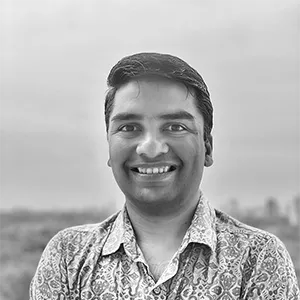
Dr Gaurav Mittal
Senior Researcher in Mobility Governance
About
Gaurav Mittal is a geographer working at the intersections of urban, transport, and political geography. He is a Junior Research Fellow at Wolfson College. His work examines how mobility systems and infrastructures are shaped by, and in turn shape, processes of power, inequality, and governance.
He holds a PhD in Geography from the National University of Singapore, where he was awarded the President’s Graduate Fellowship. Prior to joining the Transport Studies Unit at the University of Oxford, he held research positions at the University of Toronto and the Centre for Policy Research (New Delhi).
His research has been recognised through a number of competitive awards, including a Prestige Grant from the World Conference on Transport Research Society and the Centre for Urban Environments Research Award at the University of Toronto. These awards supported early work on urban mobility, governance, and low-carbon transitions.
At Oxford, his research is supported by a John Fell Fund award (as Principal Investigator) and a British Academy Knowledge Frontiers grant (as Co-Investigator), through which he is developing research on sustainable urban transitions.
Current Research
Gaurav’s research focuses on the social and political dimensions of urban transitions, particularly in the context of climate change and low-carbon mobility. His work examines how these transitions unfold in practice—often unevenly and through contestation—especially in cities of the Global South. Across his research, he foregrounds questions of power and justice, and moves beyond technical framings of sustainability by attending to everyday practices, negotiations, and conflicts.
His current research develops three interrelated strands:
The first focuses on the political economy of low-carbon mobility transitions. This work examines how decarbonisation agendas are implemented across different urban contexts, and how they reshape infrastructures, labour relations, and everyday mobilities. It includes comparative research across India, the Philippines, and South Africa, and engages with questions of technology, individual agency, and entrepreneurship.
The second strand centres on questions of justice in urban transitions, with a particular focus on dignity. Through ongoing work in Indian cities, he examines how climate vulnerability intersects with informal work and street-based livelihoods, and how transitions can reproduce or challenge existing inequalities.
The third strand engages with the political and geopolitical dimensions of transport. It examines how transport systems are shaped through state practices, regulatory frameworks, and everyday negotiations, with a focus on informality, publicness, and governance. Building on this, he is extending this strand towards a broader agenda on transport geopolitics.
Across these strands, his research adopts comparative and interdisciplinary approaches, combining qualitative methods with collaborative and engaged forms of inquiry.
Teaching
While Gaurav’s role is largely focused on research, he contributes to teaching across undergraduate, postgraduate, and executive education programmes. This includes tutorials for Transport and Mobilities (BSc Geography), one annual lecture on Sustainable Transport (MSc in Sustainable Urban Development), and occasional teaching on Global Challenges in Transport.
His teaching is closely informed by his research and engages students with questions of informality, sustainable transitions, justice, and governance, emphasising the connection between theoretical debates and diverse empirical contexts.
Outreach
Gaurav works across academic, policy, and public contexts and seeks to build connections between research, practice, and public debate. He regularly presents his work in academic and policy forums, including invited talks at the University of Tokyo, IIT Delhi, and the Transforming Transportation conference in Washington, DC, and has co-organised sessions at the RGS-IBG Annual Conference.
A significant part of his work involves engagement with civil society organisations and worker groups. Through the ongoing Just Transitions on Indian Streets project, he has co-organised stakeholder workshops in Bengaluru, Delhi, and Kolkata, working with researchers, policymakers, and worker collectives to develop grounded and policy-relevant understandings of sustainable urban transitions.
He also contributes to wider public debates on mobility, labour, and infrastructure through writing (e.g. Scroll.in, Australian Outlook) and podcasts (e.g. Policy Beyond Mobility, Ideas of India), seeking to make research accessible beyond academic audiences.
Alongside this, he contributes to the academic community through service roles, including as Secretary of the Transport Geography Research Group (RGS), Early Career Editor at Territory, Politics, Governance, and a member of the editorial board of Geoforum.
Publications
Mittal, G. (2026) “What is public anyway?”: The politics of urban transport in Shillong, India. Urban Studies.
Mittal, G. (2026). Vernacular governance of public transport: contesting formalisation from below. Applied Mobilities.
Mittal, G., Boateng, F. G., & Schwanen, T. (2026). Tides of transition: vehicle flows, afterlives, and the remaking of mobility in Africa. Transfers, 16(1), 104-114.
Das, P., Mittal, G., Sarma, J. (2025) Entangled exclusions: Borders, frontiers and urban geopolitics from northeast India. Singapore Journal of Tropical Geography, 46(2), 230–252.
Mittal, G. (2022) The State and the Production of Informalities in Urban Transport: Vikrams in Dehradun, India. Geoforum, 136, 273–282.
See Google Scholar for full overview of publications