
Listening to the Streets: Reflections from JusTIS Introductory Workshops in Bengaluru, Delhi, and Kolkata

Just Transitions on Indian Streets (JusTIS) is a British Academy funded research project that examines how Indian cities can respond to climate change in ways that are fair and inclusive for street-based workers. Focusing on street vendors, autorickshaw and taxi drivers, and platform-based delivery and ride-hailing workers, the project seeks to centre the voices, experiences, and knowledge of these workers in planning for more equitable and sustainable urban futures. Through comparative fieldwork in Bengaluru, Delhi and Kolkata, JusTIS aims to foreground workers’ lived experiences and co-produce knowledge that can inform more just, inclusive, and dignity-centred transitions.
Between September and November 2025, the JusTIS project team held three introductory workshops in Bengaluru, Delhi and Kolkata, bringing together over 130 stakeholders from workers unions, civil society, and academia. These workshops marked the start of our field engagement and provided a much-needed space for stakeholders to articulate how climate change, dignity, and urban transitions intersect in street-based workers’ everyday lives. Each workshop began with an overview of the project, followed by the reflections of local experts and three rounds of world café discussions. Together, these conversations generated a rich set of insights that will guide our research in the coming months.
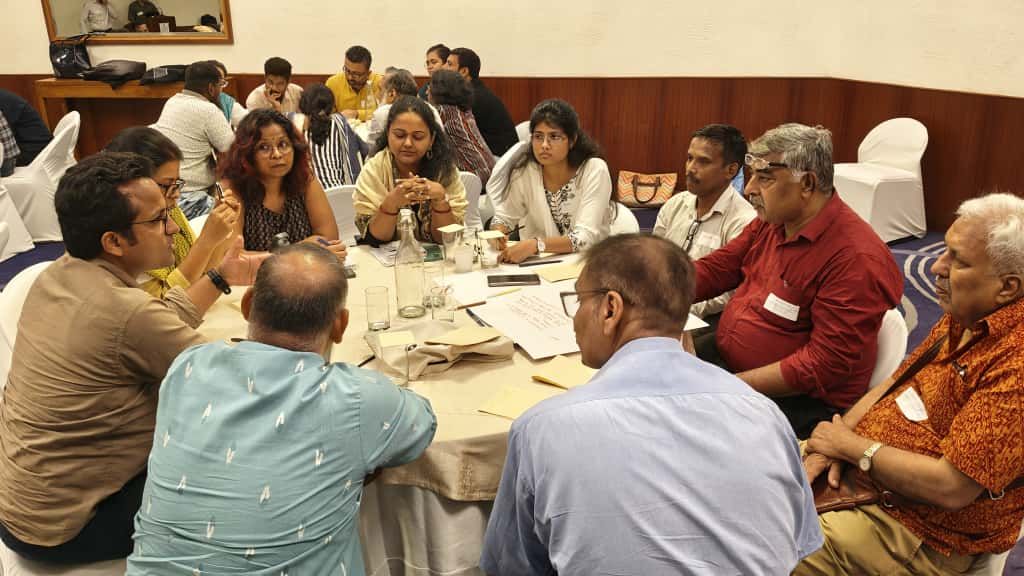
Across the three cities, local experts highlighted that climate change cannot be understood in isolation from the structural inequalities that already shape the lives of street-based workers. Climate impacts intensify vulnerabilities rooted in caste, gender, migration status and informality, and these intersections must be central to any study of adaptation. They emphasised that climate risks are layered onto longstanding exclusions in Indian cities, such as the absence of shelters, potable water points, and toilets; the policing of informal work; the lack of legal recognition; and the disappearance of affordable housing. It makes everyday survival for workers more precarious.
Concerns were also raised about the limited vocabulary available to describe climate change in local languages, the invisibility of mobile vendors and delivery workers in policy, and the widening gap between rapid technological transitions and the institutional neglect of those who keep cities functioning. There is a need for grounded research that moves beyond technical framings of “resilience”, engages with workers’ lived realities, recognises the diversity within worker groups, and centres dignity, rights, and citizenship in conversations about just transitions.
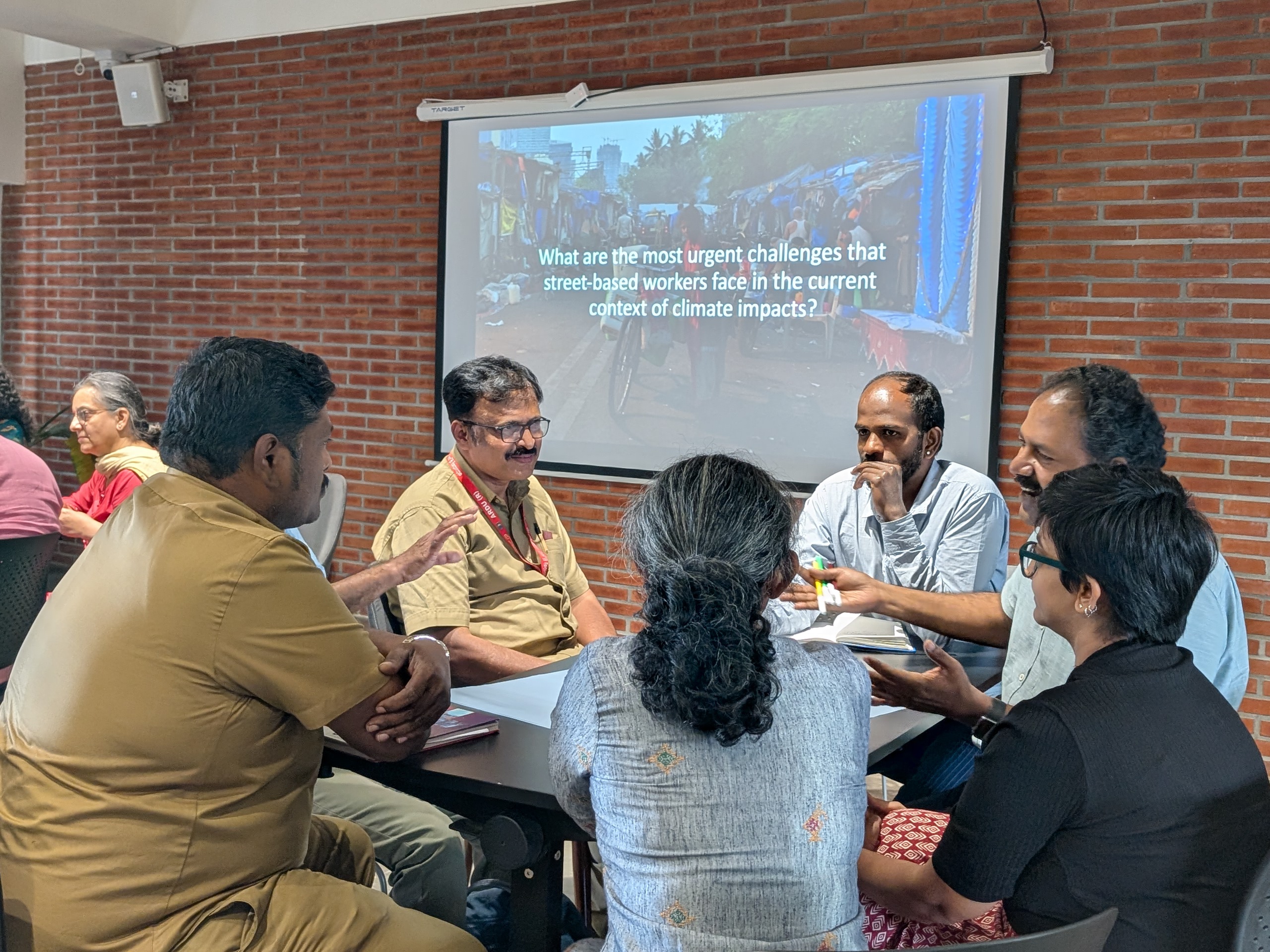
To deepen these conversations, the workshops shifted into a world café format, organised around three guiding questions: What are the most urgent challenges street-based workers face in the context of climate impacts? What does dignity and recognition mean in their everyday lives? And how can researchers engage respectfully and ethically with workers during fieldwork? These questions were chosen deliberately to trigger discussion on both immediate material issues, such as heat, flooding, and income loss, and on the less visible but equally important questions of belonging, respect, authority, and power. The format encouraged cross-sector dialogue and enabled workers from different backgrounds to identify shared struggles as well as distinct vulnerabilities, creating a foundation for collective reflection on what a just transition must entail.
The discussions on climate impacts revealed a consistent picture across cities: street-based workers are living the climate crisis every day. Extreme heat, erratic rainfall, and worsening pollution directly affect their health. It, while reducing their working hours and income, increases out-of-pocket spending on medical care. Workers described fainting spells, dehydration, blood pressure spikes, respiratory illness, disrupted menstrual cycles and fatigue as routine experiences. Flooding and waterlogging destroy goods, damage vehicles, and force vendors to close their work early, while unpredictable weather keeps customers indoors and reduces earnings. The lack of basic infrastructure, such as shade, water, toilets, drainage, resting points and storage, intensifies these vulnerabilities, as does the absence of social protection or compensation during climate shocks. Delivery workers and transport workers described the pressures of algorithmic demands and changing mobility patterns, which leave them navigating dangerous roads during storms, heatwaves, and high-pollution periods. Across groups, workers stressed that climate-related losses compound pre-existing precarities such as police harassment, extortion, insecure housing, and the absence of worker identity cards.
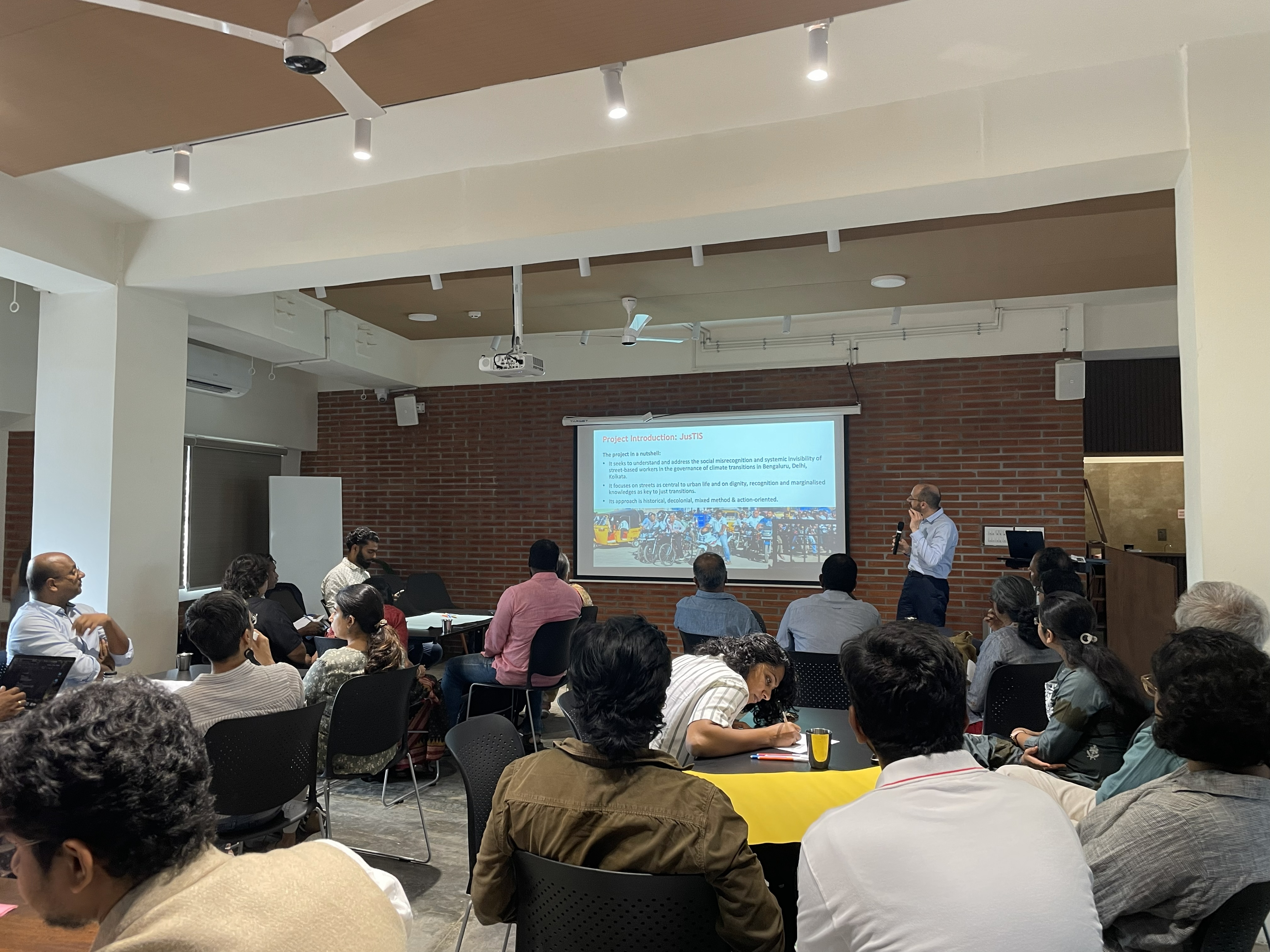
When asked what dignity and recognition mean to them, workers spoke about dignity not as an abstract concept but as something felt or denied in the smallest interactions of daily life. For many, dignity begins with respectful communication: being addressed politely, not dismissed or humiliated, and not treated as lesser due to caste, gender, religion, or occupation. Workers recounted frequent experiences of verbal abuse, exclusion from buildings and toilets, mistreatment by customers, and harassment by police and municipal authorities. Across the discussions, dignity emerged as inseparable from rights, safety, infrastructure and the ability to imagine a future for oneself and one’s family.
Recognition, in turn, was understood as both legal and social: an affirmation that workers belong to the city and have a legitimate place in shaping it. It involves the right to work without fear, the security of legal identity, and acknowledgement of their economic and social contributions. Vendors emphasised how eviction and confiscation of goods are among the most profound violations of dignity. Women described the added burden of sexual harassment, stigma, and safety concerns, while delivery workers described being penalised by rating systems, denied access to lifts or entryways, or subjected to discriminatory behaviour.
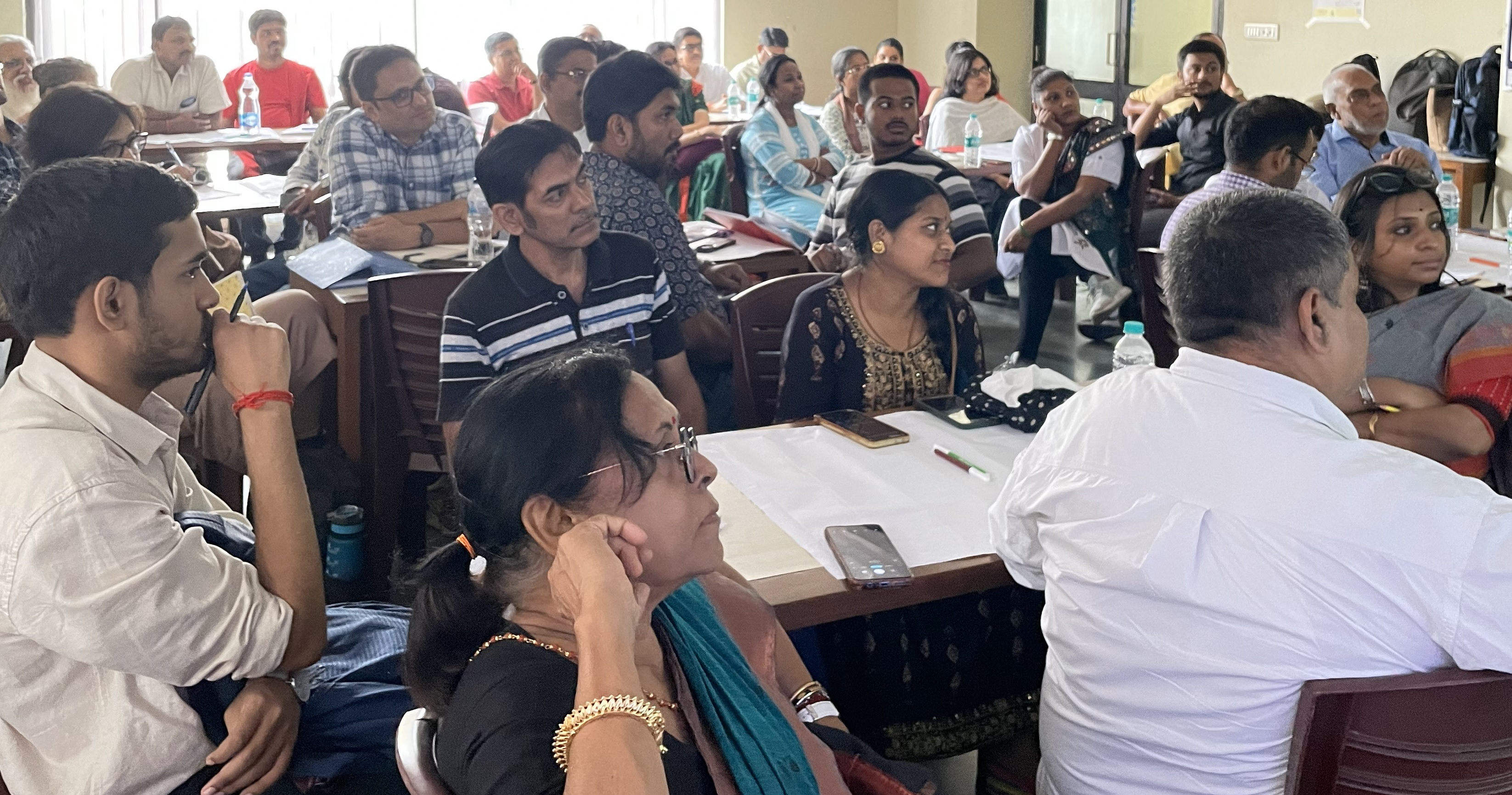
The final round of discussions focused on how researchers can engage ethically with workers. Participants stressed that ethical engagement begins with trust, transparency, and an understanding of workers’ time and constraints. Many spoke about previous research projects that had arrived abruptly, extracted information, and disappeared, leaving no sense of benefit or closure. Workers urged us to approach slowly, spend time listening, avoid disrupting income-generating hours, and speak in local languages. They emphasised that research must be reciprocal: workers should not only be respondents but collaborators, and findings should be shared back in meaningful ways. Participants encouraged the use of what in the social science literature are known as participatory and feminist methods, such as shadowing, open conversations, listening sessions, and gender-sensitive group discussions. They stressed the importance of protecting anonymity, especially around sensitive topics. They also asked the project team to confront the power dynamics inherent in research and to co-design elements of the process where possible. Ethical engagement, they argued, requires not only methodological sensitivity but also a commitment to ensuring that research contributes to strengthening worker unions, informing policy, and expanding workers’ own capacity to advocate for dignified and climate-resilient futures.
Across the three cities, the workshops generated a clear set of insights: that climate vulnerability is inseparable from social and political marginalisation; that the struggle for dignity lies at the heart of street-based work; that recognition must extend beyond laws and documents to everyday interactions and structural protections; and that meaningful research must be collaborative, accountable, and rooted in the lived experiences of workers themselves. As JuSTIS moves forward with other research methods, these insights will guide our commitment to the workers and just transitions. We remain grateful to the workers and organisations who shared their time, knowledge, and trust, and we look forward to continuing these conversations as we collectively imagine what just transitions on Indian streets must look like.
Through comparative fieldwork in Bengaluru, Delhi and Kolkata, JusTIS aims to foreground workers’ lived experiences and co-produce knowledge that can inform more just, inclusive, and dignity-centred transitions.

